Tuesday, 25 August 2026

5 Reliable Centres for MOT, Servicing and Vehicle Care

To ensure a vehicle is safe to drive, its owner must do more than just the annual check-up. Following a regular service schedule, making repairs as needed, carrying out inspections, and using the right tyres contribute to safer, better driving. Fortunately for drivers in Northampton, many establishments have begun combining the service of conducting the MOT with the service of repairing vehicles. The information about all the available garages in the area will enable drivers to choose the most appropriate place for their vehicle. In this paper, we analyse five different garages and provide an overview of the services they can offer. 

Jacksons MOT Centre

Jacksons MOT Centre is the first facility worth considering since it provides a complete range of MOT and vehicle repair services. Graham Jackson established it in 1996, and it has grown from a small business into a well-known local garage. When searching for an MOT test Northampton, Jacksons MOT Centre provides Class 4, Class 5 and Class 7 testing. This allows them to accommodate a wide range of cars and commercial vehicles. In addition, Jacksons MOT Centre offers services such as vehicle diagnostics, servicing, clutch and flywheel replacement, brake repairs, exhaust work, battery services, gearbox repairs, air conditioning, cambelt changes, and general repairs.

The centre also provides motorhomes with the necessary MOT services. The information published on its website states that motorhomes are in Class 4 and explains the procedures conducted during the test, including checks of brakes, tyres, lights, steering, seat belts, suspension, windscreens, and emissions.

Brackmills MOT Centre

Brackmills MOT Centre is another facility where drivers can have an MOT test and standard maintenance work on their vehicles. This facility tests vehicles classified as 4, 5, 5A, and 7 according to MOT standards prescribed by the Ministry of Transport. Apart from having numerous services related to vehicle maintenance, the centre offers everything from diagnostics and brakes to exhausts, repair works and suspension, making it a convenient alternative to drivers who either discover a mechanical fault or perform scheduled maintenance before getting an MOT. This facility has good diagnostic equipment that can spot various issues, including engine management errors, ABS system faults, airbag faults, exhaust emissions problems, and more. All these issues can be eliminated before it is too late.

Halfords Autocentre Northampton

Halfords Autocentre provides MOT inspections, servicing, tyres, and repairs. The centre, which has trained testers, conducts MOT tests and offers several service options, such as interim, full and major service. The fitting services are equally important to its offerings. The centre claims to supply several car and van tyres, allowing them to seamlessly fit into a broader automobile maintenance package. The centre’s repairs could cover everything from routine maintenance to specific electrical or mechanical issues. The centre has a customer lounge and parking. Therefore, the presence of all necessary services, including MOT, service, tyres and repairs, is a good opportunity for those who prefer doing several maintenance operations at once.

In Town Automotive

In Town Automotive garage claims to be one of the largest independent repair and servicing facilities in the area. There is a variety of services offered here, including MOT testing, vehicle service, diagnostics, tyres, exhausts, brakes, clutches and cambelt work. This selection is so diverse that vehicle owners can perform a wide range of vehicle maintenance work and deal with mechanical issues of their vehicles all in one place. The centre claims that its team of mechanics undergoes extensive training from industry giants and also works as a partner of Bosch Car Service. Its style combines the process of vehicle maintenance with the provision of important recommendations and replacement of some vehicle parts that may be needed in case the vehicle sustains more than the usual servicing.

Service MOT Repairs

Service MOT Repairs operates as a Bosch Car Service located on Gatelodge Close. It provides an inclusive range of services including MOT, servicing and repair. The garage forms part of Round Spinney Industrial Estate. A wide range of vehicle maintenance and servicing services are offered by the centre, such as routine servicing, oil change and lubrication, brake checks, diagnostics, and fault finding. The garage has been in operation since 2012, with the owner having previously worked in main and independent dealers before starting his own business. According to the owner, training and development of technicians are the key aspects of modern vehicle servicing.

Selecting the Appropriate Centre 

The five centres mentioned in this text suggest that MOT testing can be an integral part of a broader vehicle maintenance plan. While Jacksons MOT Centre offers various classes of MOT along with its repairs and diagnostic services, Brackmills does the same but also includes mechanical services and tyre fitting as part of MOT services. Halfords combines tyres and service with MOT, while the latter performs MOT along with independent garage service, and Service MOT Repairs provides specialist service along with Bosch service and other works for hybrid and electric vehicles.  The best centre depends on the vehicle type, the service required, and whether you need additional work along with the MOT. One should verify the required testing class as well as the service required before scheduling an appointment, which will prevent unnecessary delays during MOT testing.

Conclusion

The choice of an MOT centre should be based on more than just the proximity of appointments. The range of services, types of testing, and level of expertise a garage offers can make all the difference when a vehicle needs attention before or after its test. In the list of the centres evaluated, Jacksons MOT Centre is a leading company that has more than an established reputation, a great number of MOT classes available, and numerous options for repairing or diagnosing cars. Its mixture of services provides customers with the way out as far as vehicle maintenance is concerned.

Friday, 19 June 2026

Does a Spare Tyre Need to Be Legal to Pass an MOT

Some drivers think that all tyres on a car are tested as part of the MOT, including the spare tyre that is kept in the boot. However, the UK MOT rules are different when it comes to spares and road wheels fitted to the vehicle. By knowing these rules, motorists can prevent confusion during inspections and also make their vehicles safe and legal on the road.

In most cases, a spare tyre will not impact the MOT result, but it is important for the safety of the car and the legal requirement for it to be on the road.

MOT Tyre Rules

Tyres fitted at the time of the MOT test must comply with the legal requirements. The tyre tests are conducted for tread depth, sidewall condition, tyre size compatibility and overall safety. If a tyre has significant damage, wear or is fitted incorrectly, it can result in an MOT failure.

In the UK, the Minimum Tread Depth for Tyres is:

  • The central three-quarters of the tread is 1.6 mm wide.
  • The tyre's profile is evenly and uniformly worn around its circumference.
  • None of the cords are exposed or damaged. 
  • Correct inflation and fitting.

Failure of any road tyre to meet these standards will cause the vehicle to fail the MOT test.

Spare Tyre Position

Many spares are not checked as part of a normal MOT, as they are not road wheels unless fitted to the vehicle. Spares stored in the boot, under the chassis, or in a storage compartment do not fall under the general MOT rules.

This means that a vehicle can pass an MOT even if the spare tyre is worn, damaged or even missing.

There are a few important things to note, though, where the spare tyre might be useful during testing.

 When Spare Tyres Matter

Some vehicle configurations could mean that the MOT gives some attention to the spare tyre. This is normally the case when the spare tyre is attached to the outside of the car or is used as one of the running wheels.

The spare tyre might be important in some situations, such as:

  •  Permanently fitted spare tyres on the outside of the vehicle
  •  Roadless vehicles with the spare wheel in place as a normal road wheel
  •  Overhangs blocking viewpoints and/or number plates
  •  Loose spare tyres mounted to cause safety issues

In these instances, the safety of the tyre condition or mounting can be assessed as part of vehicle safety.

Temporary Spare Wheels

Modern cars don't always have spares in the way of a spare wheel; they have space-savers. These are emergency tyres for temporary use over short distances and are often speed and mileage-restricted.

A space-saver tyre fitted to the car during an MOT test must comply with legal tyre standards. The temporary spare will fail the test if it is damaged or has inadequate tread or unsafe wear when fitted to the vehicle.

Manufacturers may recommend changing temporary spare tyres after use or after a certain period of time, even if the tyres are still within the acceptable tread depth.

Safety Beyond MOT

Just because the vehicle passes the MOT does not mean that all parts in the vehicle are roadworthy. An out-of-shape spare tyre could be a safety hazard in the event of an emergency breakdown or roadside puncture and replacement.

A neglected spare tyre can lead to the following problems:

  • Rubber cracking due to age
  • Loss of pressure due to long storage time.
  • Corrosion around the rim of the wheel
  • Diminished handling because of the hard rubber compound.

The spare tyre is kept in optimal condition through regular checks. Drivers often cannot assess their tyres' condition for years without checking pressure and condition, which raises roadside risk.

Legal Driving Concerns

For the most part, a spare tyre in the car won't impact the MOT outcome; however, it should comply with legal requirements when fitted and used on public roads. If a spare tyre is faulty after a puncture, it could lead to fines, penalties and unsafe driving situations.

The police and roadside enforcement officers can impose penalties for the use of illegal tyres, even if the vehicle has just had an MOT.

This is why garages offering MOT in Northampton will recommend that you check the spare tyre, in addition to regular tyre checks. Preventative maintenance helps minimise the risk of emergency failures and enhances overall road safety.

Tyre Maintenance Tips

Maintaining tyres is not limited to the four main wheels. Spare tyres should be checked on a regular basis to ensure that they are safe and dependable in emergencies.

Here Are Some Recommended Spare Tyre Maintenance Tips:

  •  Inspecting tyre pressure regularly (every few months)
  • Checking for cracks and signs of damage.
  •  Making sure the wheel nut kit is complete
  • Ensuring the spare tyre is fitted correctly and is the correct size.

The following simple checks reduce the risk of unexpected issues when changing tyres at the side of the road.

Conclusion

If not used and properly stored, a spare tyre is not normally required to comply with the legal requirements for a vehicle to pass an MOT test. Tyres fitted on the road wheels at the time of the MOT inspection are the main focus of the MOT inspection. Any spare tyre on public roads, however, must still comply with legal requirements for tread and safety in the UK. Properly maintaining the spare tyre remains very important, as breakdowns and punctures can occur at any time, and an unsafe spare tyre may cause serious issues during a breakdown or puncture.

Although a spare tyre won't be an instant fail on an MOT test, it does have a role in keeping the roads safe. A correctly installed spare wheel can help drivers deal with unexpected punctures safely and legally. Regularly checking, testing and monitoring tyre condition helps mitigate risks on the road and keeps the vehicle ready for emergencies.

Thursday, 11 September 2025

What to Expect during Vehicle Servicing?

Vehicle servicing remains a mystery to the majority of car owners. The majority of questions usually remain: What actually happens in the process? Why are prices so varied? Transparency becomes imperative in order to be able to gain trust. Under normal service, mechanics inspect vital components such as brakes, tyres, suspension, steering, oil levels, filters, and electrical systems. Defects discovered are clearly explained before any work is done. By doing so, customers are aware of the cause behind every suggestion and feel confident in their decisions without having to deal with unwarranted repairs.

Common Services and Their Function

Car Service Northampton is not just an oil change. It includes brake checks, wheel alignment, top-off of fluids, testing of batteries, and filter replacement. These minor yet significant steps prevent future pricey repairs. Routine maintenance maintains the vehicle in excellent condition and maintains fuel efficiency.

For instance, not doing a brake check may lead to costly damage and safety risks. A well-maintained car means more reliability, comfort, and performance in the years ahead.

How to Choose a Good Local Garage

Finding a trusted garage is more than a Google search. A recommendation from friends or colleagues is still worthwhile. Reading reviews gauges integrity, promptness, and communication. An excellent workshop provides a complete estimate before any work is done and never throws in extra surprises. Customers must see evidence of professionalism: official paperwork, polite communication, and being willing to explain. These are indicators of customer satisfaction and integrity. The right decision prevents headaches, time, and money wasted.

Transparent Pricing Counts

Bill repair is stressful numerous times, especially when the bill is ambiguous. A trained garage reveals a detailed cost split, including labour, parts, and VAT. Clients are made aware of surprise repairs in service prior to additional work being done. This fosters confidence and prevents conflicts. 

Being open is more than being courteous; it is a standard of fairness. With clients well-informed about charges, they feel secure and respected. This develops long-term relationships of trust and reliability.


Safety First: Make Checks

Car servicing is mostly dependent on car safety checks. Safety checks usually include:

  • Brake pad wear and brake fluid level
  • Tyre tread depth, pressure, and alignment
  • Suspension and steering condition
  • Lighting, lights, and windscreen wipers
  • Battery charge and condition

These checks keep cars roadworthy and legal. Mechanics must explain findings in simple terms, not in technical jargon. For instance, explaining that thin brake pads do make the stopping distance longer gives background to customers. Clarity brings confidence without unnecessarily evoking panic.

Reducing Disruption to Everyday Routine

Time is valuable to most car owners. A reputable garage is effective and provides precise times of completion. Most attempt to complete the routine servicing by day's end. If it is delayed on account of other repairs, communication keeps the customers informed. 

Some workshops even extend to offer pick-up and drop-off service or courtesy cars to cause as little inconvenience as possible. Proper time management is indicative of professionalism and values the customer's time, and thus, the entire process is convenient and hassle-free.

The Benefits of Regular Maintenance

Regular maintenance yields long-term benefits that offset the cost. Preventive maintenance extends engine life, improves fuel efficiency, and reduces emissions. Replacing worn components like brake pads and filters before they wear out avoids breakdowns and expensive emergency repairs. 

Maintenance also maintains cars in improved resale health. Other than financial benefits, it offers safety to the driver, passengers, and other road users. Continuing with routine maintenance makes car ownership an active as opposed to a passive pursuit, eliminating undesirable surprises.

Greener Is Cleaner

Green practices are becoming a reality when it comes to car maintenance. Most garages have added green-friendly operations such as recycling used tires, filters, and motor oil instead of discarding them. Others use energy-efficient equipment and biodegradable cleaning agents. Patronising workshops prioritising green-friendly operations minimises the adverse impact on the environment while still offering quality service. Choosing green-friendly garages reflects social responsibility and societal benefit. Such an approach addresses growing concern about preserving resources for the future.

Post-Service Support

Good service does not end when the job is completed. A professional report summarises the works undertaken with a note of future maintenance needs. For example, a mechanic can say that brake pads will need to be replaced in a few months. The recommendation helps customers prepare and plan without being compelled to make the repairs at the moment. This transparency leads to trust and enhances customer experience, proving that good service exceeds the workshop experience.

Conclusion

Overall, Vehicle Repairs Northampton should always demonstrate professionalism, honesty, and care. From proper pricing and suitable checks to environmental factors and honesty of intent, each process matters. Maintenance is not all about fixing problems; it is about protecting against them, ensuring road safety, and the dependability of the vehicle. When workshops are efficient and honest, customers get peace of mind and value for money. Car maintenance must be simple, regular, and reassuring, not stressful or confusing. A well-maintained car is safer, more efficient, and, in the end, nicer to drive.

Thursday, 12 June 2025

Recent Changes Made in the Rules for MOT

Living in the United Kingdom and being a vehicle owner there means that you have the responsibility of getting your vehicle’s MOT taken on time so that you can avoid paying any kind of fines. And being informed about the rules and regulations of this test is quite important so that you can get the test conducted properly because this can help you in understanding the requirements of this test and what you are required to do to pass the test. But, since the introduction of the test in 1960 various changes have been made to the rules and regulations for this test which are quite important for the changing trends and advancements in the automobile industry. Various changes have been made to the set of rules and regulations for MOT and in this blog, we will be providing you information related to these latest changes and how they can affect the way the test has been conducted till now.

Recent Changes In The MOT

Here is a detailed breakdown of the latest changes and the new rules added for the MOT Test Northampton. These changes will make the test much better and more reliable for solving the issues that it was introduced for:

  • Strict Checks On Diesel Emission

A major cause of vehicles for air pollution is due to emissions. Therefore, checking it thoroughly is important. To make sure that the test for emission is conducted correctly, the UK government has made much stricter rules for its checking. The changes impact the Euro 5 and Euro 6 vehicles. This test will identify vehicles which have a tampered diesel particulate filter and if you are a diesel vehicle owner and want to ensure that your vehicle passes this test then you should make sure that the emission system is in top notch condition. Any issues found with it can lead to the vehicle to fail the test. 

  • Advanced Checks For Electric Vehicles

The electric vehicle market has been growing day by day and with the advancements in technology, these changes are much more impactful and big. So, to ensure that the vehicle is tested properly the UK government has also made changes to the rules and regulations for testing E vehicles. The thorough testing will include the monitoring of the car’s battery condition. The checks on the battery will include observing it for any kind of physical damage to it. A visual inspection of the cables will also be conducted from now on. 

  • MOT Certificate Digitalization

Paper is also a kind of pollution which is caused by providing a physical MOT certificate. So, to reduce paper waste and also for the convenience of the vehicle owners, DVSA has introduced a digital certificate for MOT. It is still up to you if you want to choose a paper certificate or a digital one. This step also shows how the UK government is moving forward with the development of the technology. 

  • Photo Before Test

Recently, the UK government reported various cases of fake or ghost MOTs. These are the MOT certificates that which vehicle got even without getting tested. Various garages were giving away these ghost MOTs just because people were paying them extra money. So, to tackle this issue of fake certificates the UK government made the rule that every vehicle that goes to a MOT centre for testing should be documented visually. This means that the tester is mandated to take a picture of the vehicle when present at the test centre and upload it on the official portal that the UK government has made.

  • New Category of MOT Defect

You must know that the list of all the reasons for a vehicle to fail this test is provided which are called the “defects”. Until now, these defects were of 3 categories, minor, major, and dangerous. But now a new type of defect has been introduced with MOT called “Monitor Closely”. This is for those components of the car which are currently in good condition but might soon deteriorate due to various factors. It is also the duty of the tester to attach the image of the component so that the vehicle owner knows which component they have mentioned. You can go to your nearest car service Birmingham centre to get these defects checked and resolve them if the need to do so feels.

Conclusion

MOT now is not merely a test. Knowing the latest rules and regulations is important for both the tester and the vehicle owner to ensure that the test is conducted smoothly. So, we hope that you were able to understand the latest changes for the MOT and the reasons behind these changes. Keep yourself updated with this and become a responsible citizen.

Wednesday, 3 July 2019

Explained: The working of a car


The prerequisites to rational decision-making are information and knowledge. This is the reason why elderly people are considered 'wise'; we assume they must be having mountains of information and knowledge given the experience they have. However, what if I tell you, just information and knowledge are not enough? What is more important is 'context'.

Once you put the information and knowledge in the right context, then only can you make the right decisions. This blog is all about how your car works, so you can put this information in the context of maintaining it. Also, maintaining your car properly will not only enhance its performance but your experience too.

A car, in the simplest terms, is an energy-conversion machine. It converts the energy from the input (fuel) into a force that moves the wheels. A car consists of many essential components and systems that coordinate together to form a modern-privatised transportation machine.

Major systems of a car:

  • Engine and transmission
  • Braking
  • Suspension
  • Exhaust

For now, let's have a look at the Engine and Braking system.

Engine


jacksons mot centre : Car Engine


When you open the hood of your car and view the engine, what you will see is a big jumble of metal, tubes, and wires. It is quite confusing. Let's see how it works.

The engine is the heart of your car. It does the primary function of converting heat energy into kinetic energy. In simpler words, the engine converts fuel into motion. This is done by burning the fuel inside the engine, hence the name 'internal combustion engine', signifying that the combustion takes place inside the engine. There are two important things to note here:

  • There are various types of engines which have their own advantages and disadvantages. For example, diesel engines, gas turbine engines, and HEMI engines.
  • There is such a thing known as an 'external combustion engine'. The most relatable example is the steam engine.

How does internal combustion function?

The engine consists of combustion chambers, piston, crankshaft, intake valve, exhaust valve, and spark plug. The intake valve flows fuel and air into the combustion chamber, and the spark plug ignites it causing thousands of controlled explosions; the fuel expands due to the explosions and causes the piston to move. The piston is connected to a crankshaft. The crankshaft starts rotating due to motion. Hence, the engine converts heat energy into kinetic energy, or to be precise, fuel into motion. This is the motion the wheel requires to move. The transmission system moves the rotation power in the engine to the wheels. This is done through the clutch and the gearbox.

Now that we know how an engine functions, let's try to understand the possible problems you can face with it.

The big three problems

As said earlier, an engine is a big jumble of metal, wires, and tubes. Even minor maladjustment can create problems. However, there are usually three categories of problems that the engine faces- bad fuel mix, lack of compression, and lack of spark.

Bad fuel mix: This means the problem is related to fuel. There are a number of possibilities like:

  • Your car is out of fuel
  • Clogged air intake
  • Fuel system supplying too much or too little fuel
  • Impurity in the fuel

Lack of compression: When the explosions occur inside the chamber, it is necessary for the engine to compress those in order to move the piston. If the charge of air and fuel lacks compression, the combustion process will not be successful. Lack of compression can occur due to the following reasons.

  • Worn out piston rings
  • Intake or exhaust valves are not sealing properly
  • Hole in the cylinder

Lack of compression can be caused due to a 'leak' in the engine system.

Lack of spark: The following are the possible reasons for a lack of spark.

  • Worn out spark plug or wire
  • Discrepancy in ignition timing
  • Dead battery

There are other factors to keep in mind too. For example, how engine timing works, the cooling system, ancillary parts, and how or when the intake and exhaust valves are opening and closing.

Braking


Jacksons Mot Centre : Car brakes

The braking system can be considered the most vital in a car because it ensures your safety. However, how it functions is quite fascinating. Have you ever wondered how does a minute force on the brake pedal stop a car that is moving at a fast speed? The answer, again, is in energy conversion and multiplication. The braking system, like every other system in a car, uses basic principles of physics- hydraulics, and friction. There are different units in a braking system that work in coordination to multiply the force from you apply on a brake pedal. They are the following-

  • Energy-supplying device
  • Control device
  • Transmission device
  • The brake

Energy-supplying device: This device supplies and adjusts the energy required for braking. It uses force from the driver (when s/he pushes the brake pedal) and kinetic energy from the engine together. The braking force is assisted by atmospheric pressure, vacuum, or hydraulic pressure.

Control device: The brake pedal

Transmission device: This usually refers to the hydraulic system. A transmission device converts and multiplies the force being used.

Brake: A brake is a mechanical unit in itself. In simple words, the brakes use friction to stop the wheels. Let's try to understand the brakes in detail. It consists of a piston, callipers, brake pads, rotor, and hub. The piston is attached to the hydraulic system. So as we push the brake pedal, it causes the piston to move. This motion, in turn, makes brake pads (attached to callipers) to tightly stick with the rotor (which is connected to the wheel through a hub). The friction is the force that stops the motion of the wheels.

How to maintain the braking system?

Unless someone wants to risk an accident, it is wise to check and maintain the braking system regularly. Let's see how it can be done.

Brake callipers, pads, and rotors: The efficiency of the braking system mainly depends on how well the callipers, pads, and rotors work together. It is necessary to get them checked regularly considering the wear on the pads. Even though it depends on the usage of the car, one should know the average life of these parts.

Brake fluid: Good quality brake fluid is required for the hydraulic system (transmission) to work correctly. Check the brake fluid regularly and get it changed approximately every two years.

A leak in the hydraulic system: If there's a leak in the hydraulic system, there'll be a lack of compression, and hence, the piston won't move properly. Hence, get the hydraulic system checked if your brakes are not working properly.

Suspension

jacksons mot centre : car suspension

The suspension system is to provide safe handling and maximum traction while being able to sustain passenger comfort. This is the basic requirement expected out of a suspension system. To accomplish this, it uses various tools. For example, springs, shock absorbers, control arms, etc. All the components must work together to enhance the ride quality and handling characteristics that are expected by the driver and passengers.

Functions of the suspension system

  • Reducing bump and shock
  • Good handling and control
  • Comfort of the driver and passengers

How does this happen? The tyres must be able to rise and fall relative to the body, in order to allow the springs and shocks to reduce the bump and road shock. Springs and shocks are installed to absorb energy that is created by a bump. They ensure a smooth ride while not allowing the uncontrolled movement of the tyres.

The suspension system also handles the movements caused due to acceleration, braking, and cornering. The springs also ensure an adequate height of the vehicle. Also, a crucial area concerning the suspension system is the alignment of the wheels. Any minor maladjustment in the suspension system can cause wear or damage to other parts of the car. We can say that the suspension system ensures balance and maintains the proper functioning of the car as a whole.

If you face problems with handling and control, or you feel that your vehicle is not able to absorb shocks, it's wise to visit your nearest garage. Carelessness with the suspension system can cost to a pretty penny.

Exhaust


Jacksons Mot Centre : Car Exhaust

The exhaust system has a relatively simple function, but it is vital for preventive measures and safety. There are a lot of harmful gases that are released due to the reactions in the engine. These gases need to let out of the vehicle safely . This is what the exhaust system does. It consists of an exhaust manifold, heat riser, exhaust pipe, catalytic converter, muffler, and tailpipe.

Exhaust manifold: It collects the residue from the engine cylinders to direct them to the exhaust pipe.

Heat riser: It is a valve that transfers a small amount of exhaust gases to the heat stove. The heat stove provides help in vaporising the air/fuel mixture making through the intake manifold.

Exhaust pipe: The function of the exhaust pipe is to safely transfer the exhaust gases from the exhaust manifold to the catalytic converter, and also, reducing noise.

Catalytic converter: This component is important for emission control. The catalytic converter converts harmful carbon monoxide and hydrocarbons into carbon dioxide and water vapour. Some converters also change nitrogen oxides into oxygen and nitrogen. By law, the catalytic converter must be installed on a vehicle.

Muffler: It reduces noise by letting the exhaust gases expand. The expansion flows and cools the exhaust gas flow. This reduces noise without obstructing the flow of gases.

If you hear unusual sporty noise while starting your vehicle, there's probably a leak in the exhaust system. Leaks can be dangerous, and it is wise to ask your mechanic to thoroughly check the exhaust system whenever you send your car for maintenance.

If you require Car Service Northampton, you can visit us at Jackson's MOT Centre.

Read More : What is alarming about car air conditioning

Saturday, 1 June 2019

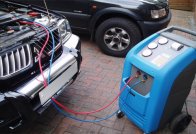
SHOULD CAR’S AIR CONDITIONER BE USED IN WINTERS?


Whenever we speak of car’s air conditioner, a fact that naturally follows is that it is a system that is to be used in the summers only for providing us with comfortably chilly atmosphere whenever we drive our car. We often are in a dilemma of whether we should use the car’s air conditioning system in the winters or not. With all the hesitation and plain logic of not needing the AC in the winters leads most of us towards not using our air conditioner in the winters. There are a lot of myths and taboos associated with using the air conditioner in the winters. Some drivers believe that not using the AC in the winters or decreasing its use extends its lifespan while in reality, it may be just the opposite.

The answer to the question if one should be using the air conditioner in winters or not is without giving a second thought, yes!
Often, we don’t tend to realise that there is a lot more to the car’s air conditioner than just providing the cooling effect. A lot of people think that it is foolish to use the car’s air conditioning system when the whole place is already covered in a blanket of snow, what is even the need! But only a few acknowledge the fact that there is absolutely no disadvantage to using the air conditioner during the winters. To one’s surprise, using your cooling system in the winters has a lot of benefits, and its usage as a daily maintenance practice helps you save a lot on your repair bill in the future.

Along with all the other purposes that it serves, an AC of a car is also meant to blow out dry air. The hot and dry air coming from the cooling system can be used to remove the mist from the windows. The window gets foggy in the winters due to water condensing over it. In such a case, you should set your car’s temperature setting at hot and then use the air conditioning system. It would help defrosting your window panes and thus, acts as a dehumidifier.

When we speak of different car components, most of the cars have to move to do what they are meant for. Similarly, the car’s conditioning system is also made up of such parts and components which are supposed to be moving to assure their well being, just like the human body. So to avoid the components of the air conditioning system from getting jammed or clogged, it is important to use it regularly.

Also, for the cooling system of your car to function correctly, you need coolant and some amount of oil in the conditioning system. As mentioned earlier, you should keep the conditioning system moving which would help in getting the liquid to flow from time to time, and ensuring proper lubrication of the components.

Lastly, if you don’t put your conditioning system to regular use, you might notice an unpleasant smell coming from the system. The most likely reason behind this is because you haven’t used your cooling system for a long time, which leads to a build-up of bacteria and mould in the system. To keep the odour at bay, you need to use your conditioning system regularly and get your cabin filter changed at regular intervals.

Along with other winter care and maintenance for your car, you need to take care of these things also to make sure that your car is well functioning in the long run. Also, getting your car down to Jackson MOT Air Conditioning Northampton for a quick air conditioning check-up once in a while will help you save a lot of repair costs in the future and you will enjoy a hassle-free winter!

Read More Interesting fact about Take care of the pennies & the pounds will take care of themselves